Friday, September 21, 2007

Berem Peacehiker - Brez denarja okoli sveta, napisal Matej Sedmak

Lani konec leta sem v knjižnici iskala idealno počitniško branje - nekaj lahkega, a zanimivega; da pritegne, a hkrati ne obremeni. Nekaj kar lahko neobvezujoče prebereš na dah, ali knjigo odložiš neprebrano, če ti ne ustreza.

S kupa knjig sem pobrala pričujočo in si jo zataknila pod pazduho. Res sem jo prebrala na dah. Malo, ker me je zanimalo kaj se zgodi, malo pa zaradi privoščljivega naslajanja nad ljudmi, ki bi za pet minut medijske pozornosti naredili vse.

Peacehiker je Slovenec Matej Sedmak, ki se je nekaj let nazaj odločil za pot okoli sveta. Dlje kot je potoval, bolj se je zanašal na dobrovoljnost ljudi, ki so mu nakazovali denar za letalske karte, ga prenočevali ali ga peljali na obed, ko je bil lačen. Ob vseh tekmovanjih za mis redno zavijamo z očmi, ko barbike serijsko rešujejo svet, ustvarjajo mir, končujejo vojne in nahranijo vse lačne. Ko pred nami stoji nekdo iz mesa in krvi, pravi, da po svetu potuje, da širi mir in ljubezen in da je lačen, ga brez pomislekov častimo večerjo. Je to zato, ker imamo potem občutek, da smo tudi sami nekaj naredili za mir na svetu, ali ker se počutimo krivi, ker sami ne naredimo ničesar v tej smeri?

Knjiga je nastala iz dnevniških, blogerskih zapiskov, ki jih je Matej objavljal s poti. Ker je bil njegov odhod medijsko precej dobro pokrit, in se je s poti tudi kasneje redno oglašal, je sčasoma pridobil zvest krog bralcev, med njimi marsikatero drhteče žensko srce. Žal je Sedmak spregledal, da sta blog in knjiga dva različna medija in da če prvi še prenese slengovsko pisanje, ga drugi - sploh v biografski, potopisni obliki - ne. Veliki deli knjige delujejo kot bi bili neposredno prepisani iz zapisov na blogu (stara, a dobro znana metoda copy-paste), pri čemer pa avtor ne premore niti toliko spoštovanja do svojih potencialnih bralcev, da bi popravil tipkarske, slovnične in druga napake, ki so se ob osnovnem pisanju prikradle v njegovo besedilo. Kljub temu da je bila knjiga domnevno lektorirana (navedba lektorice), pa vsekakor ne deluje tako. Tudi krajši del knjige, kjer dobesedno navaja svoje pismo, napisano v angleščini, je s slovničnega vidika napisan ubogo; Sedmak pa očitno niti ne pomisli, da bi kot opomno dodal slovenski prevod besedila, saj očitno predvideva in privzema, da bi morali vsi bralci njegove knjige razumeti angleško besedilo.

Sedmak pravi, da so v knjigi popisani tudi dogodki, ki so bolj osebni in jih na blogu ni opisoval. Med drugim njegova srečanja s tantrično spolnostjo in nekatera bolj pikantna srečanja z ljudmi, ki vključujejo tudi masturbiranje pred človekom, ki se je predstavil kot Ameriški Indijanec in zdravilec v svojem plemenu.

Vsekakor se zdi, da Sedmak ne zna pritisniti na zavore ob ničemer, kar bi potencialno privabilo nove bralce in nove občudovalce. Tudi ob natančnih opisih (skoraj) spolnega akta.

Najbolj moteč, sporen in moralno-etično vprašljiv pa je način potovanja, ki ga je Sedmak prakticiral. Kljub temu da je iz navedb, kaj vse je vzel s sabo na potovanje (sredi leta 2004: digitalni fotoaparat, mp3 predvajalnik, dlančnik), in dejstva, da mu je oče ponujal plačilo vseh letalskih kart, ki bi jih Matej potreboval, očitno, da so precej finančno dobro situirana družina, je Sedmak vztrajal, da denarja ne potrebuje - čeprav bi ga zlahka dobil doma. (Večkrat na potovanju ga je oče tudi obiskal na različnih delih sveta, kar dodatno dokazuje, da so si doma lahko privoščili drage letalske karte.) Namesto tega je svoj poskus neodvisnosti od staršev začel tako, da je ljudi na cesti pa tudi na internetu prosil, naj mu nakažejo in podarijo denar, s katerim si bo lahko plačal letalske karte in vpisnine za različne tečaje meditacije ipd., ki se jih je udeležil na svoji poti. Prvotni načrt - da si bo denar služil z igranjem na kitaro je opustil; očitno je spoznal in v praksi dokazal, da se da do denarja priti tudi brez dela, dokler advociraš višje cilje.

Na njegovi poti so ga tako preživljali skoraj izključno drugi - med njimi nekateri izmed najrevnejših prebivalcev sveta, ki mu niso odrekli večtedenskega bivanja v svojih hišah. Sedmak ta svoj način izkoriščanja revnejših od sebe upravičuje (in opravičuje) s principom, da je treba samo prositi in dano ti bo. Očitno nima pomislekov in niti ne težav s tem, da bi sebi od ust zanj trgali tisti, ki bi jim po vseh pravilih in po logiki moral dajati on. Če navedem celotno resnico, naj povem, da je večino imetja, ki ga je prenašal s sabo, razdal. Kar je s finančnega aspekta očitno precej majhno poplačilo za vse stroške, ki bi jih sicer imel.

Prav tako je Sedmak po vrnitvi v Slovenijo začel izvajati različne tečaje fotobranja, tantrične seksualnosti, učenja tujega jezika, meditacije ipd. (njegov spisek znanj se zdi neskončen), spretnosti torej, ki si jih je pridobil na poti in za katere so plačali drugi. Za te tečaje pa sedaj prejema plačilo. Očitno je pozabil na princip dajanja drugim, ne da bi za to zahtevali denar. Sam je leto in pol živel od milosti in dobrohotnosti drugih, za svoj čas pa zna zaračunati dobro ceno - en tečaj stane okoli 100 evrov. Prav tako se sama za noben denar nebi udeležila njegovega tečaja angleščine - njegovi blogerski zapisi v angleščini so jasen znak, da Sedmaku ni pod častjo zaračunati za poučevanje nečesa, česar še sam ne obvlada. (Namig: uporaba časa Present Perfect je sistemtično nepravilna.)

Velika ironija Sedmakovega potovanja po svetu je dejstvo, da je nekaj dni po začetku potovanja prenočil v nekem samostanu, kjer je menihu povedal o svoji nameri in o tem, da bo dogodke s poti objavljal na internetu in v drugih medijih. Menih ga je vprašal, če se mu ne zdi bolj smiselno, da bi svojo misijo opravljal v miru in samoti, ne da bi kdo zanjo vedel. A Sedmak brez tovrstne pozornosti očitno ne (z)more. Na svoji spletni strani sproti zapisuje, kje se nahaja in objavlja svoje intervjuje, ki so se pojavili v medijih. Očitno je ugotovil, da je new-agevsko iskanje samega sebe in svojega miru idealen material za sočasno promocijo sebe. Ob očitnem pomanjkanju kritične samorefleksije je pozabil, da s tako pogostim medijskih pojavljanjem tudi čedalje bolj izpostavlja svoja notranja nasprotja in da s tem povečuje možnost, da bodo ljudje uvideli, kdo v resnici je.

Sedmak je eden od čedalje pogostejših ljudi, ki so mojstri samopromocije in znajo spretno vrteti jezik. Ki jim neizmerno godi, da jih ljudje občudujejo, poznajo in imajo za heroje ali vsaj vzornike. Eden tistih, ki se nikoli ne bi zmogil zapreti v kočo na osamljenem terenu, ugasniti mobilni telefon in mirno opravljati svojo nalogo, ne da bi o tem komur koli razlagali - pričakujoč hvalo, strinjanje in pohvalo. Očitna tendenca po odobravanju se pri Sedmaku kaže že v tem, da v celotni knjgi ne imenuje niti ene osebe, ki bi ji prebral svoje ideje in zapise in ki se z njimi ne bi strinjala. Tistemu, kar mu je povedal italijanski menih, ne nameni niti ene nadaljnje misli. Edina menda temna stvar njegove osebnosti, s katero se na poti sooči (in jo tudi razreši), je dejstvo, da ne zna osvajati žensk in da ima slabo samopodobo na tem področju. Seveda v knjigi ne manjka pozerskih fotk z njegovega potovanja.

Damijan Murko je torej talentiran slovenski pevec, Matej Semak pa novi razsvetljenec, ki svojo pot okoli sveta imenuje "šola v mednarodnih odnosih" (Predstavljam si, da se ob slednjem Danilo Türk le blago namehne.) in ki bo Slovence naučil, kako biti srečni, obvladati angleščino in fotobranje ter prakticirati zdravo spolnost. Da ne omnjeamo, da se pri triindvajsetih čuti dovolj zrelega za predsedniškega kandidata. Neliko velik zalogaj za nekoga, ki je na začetku svoje poti mislil, da so geji nekaj nezaželenega, saj ne bodo deležni zveličanja. Morda je že res, da je Sedmak na poti odrasel, a razvoj dogodkov kaže, da ima pred sabo še dolgo pot, na kateri mu nekoliko več kritičnega vpogleda v samega sebe ne bi škodilo. Ne maram ljudi, ki govorijo eno, delajo pa drugo. Ko bi vsaj zmogli biti tiho...

Labels: ,

posted by Nadezhda | 22:00 | 17 comments

Wednesday, July 18, 2007

Reading Harry Potter and the Goblet of Fire by JK Rowling


New book, lots more of curious little details and as always, if you haven't read the books - be wary of SPOILERS.

  1. The Loovegoods (Luna and her Dad) obviously live near Ron.
  2. Mundungus Fletcher is again casually mentioned and I cannot resist feeling he's going to be important to book seven.
  3. In the Sorting Hat's song Hufflepuf is mentioned as coming from a valley- could this have any connection to the location of Hufflepuf's Horcrux and/or the dragon from the Deluxe Cover Art?
  4. Do the spells Mr. Ollivander performs with each wand have a meaning? (Fleur - flowers, Cedric - a stream of silver smoke rings, Krum - birds and Harry - a fountain of wine).
  5. How come Sirius knew Bertha Jorkins? Was is that she walked on him kissing a girl behind the Herbology greenhouses?
  6. A bezoar is again mentioned as an antidote for most poisons. Note that a bezoar saves Ron's life in HBP.
  7. Krum seems really nice from what Hermione said of him - seems like Hermione is taking a leaf out of Dumbledore's book here - making friends rather than enemies.
  8. There's just got to be a subplot involving giants. Hagrid's mother is prominently mentioned in GoF and his brother is introduced in OotP and Grawp starts talking by the end of HBP. This has got to be important.
  9. I have a problem with the underage drinking and heavy drinking that goes on in the series in general. Butterbeer definitely has some alcohol in it and I am not too happy seeing Butterbeer drank as though it was pumpkin juice. Also, the amount of heavy drinkers in the series is quite high. I would undersand that Rowling tries to be frank about adults drinking heavily, but I have an issue with her making it seem that drinking an alcoholic beverage on a daily basis is acceptable in children.
  10. The memories Harry visits in the Pensieve look very much like the memory Harry visited in Riddle's Diary, but they're not Horcruxes like the Diary.
  11. In the memory from the Pensieve we find out that Voldemort has a spy from the Department of Mysteries. This implies that Voldemort knows much more about that place than Harry does. Also, will this knowledge give Voldemort advantage in the final battle between him and Harry?
  12. We find out Snape was a Death Eater, but two books later we still don't know why Dumbledore is convinced Snape isn't a danger.
  13. Also, the real Moody could be a mentor to Harry in DH, as he was one of the best Aurors in his time.
  14. Was Ludo Bagman a naive fool or a real spy for Voldemort? Because of his Quidditch career people are less willing to believe him to posses any bad character traits. This again shows prejudice and favouritism.
  15. Dumbledore says that Harry and Voldemort are connected by the curse that failed. If the curse failed, then Harry cannot be a Horcrux or could he?
  16. Voldemort will establish an army of creatures whom all fear. What are these? Inferi?
  17. Voldemort having taken Harry's blood now has Lily's protection, but will this also expire on Harry's 17th birthday?
  18. Voldemort now seems to know how Harry was protected by Dumbledore. But will this knowledge give him an advantage over Harry?
  19. Many people have claimed that the final battle won't involve wands, because Harry's and Voldemort's wands cannot duel. That is true, however Voldemort can put a hex or curse on Harry and their wands function normally as long as they don't duel.

Labels: ,

posted by Nadezhda | 13:24 | 0 comments

Tuesday, July 17, 2007

Reading Harry Potter and the Prisoner of Azkaban by JK Rowling


SPOILERS - proceed at your own risk!

Now, Prisoner is a very fine book indeed. Full of longing and reminiscing, a beautiful nostalgic feeling. It's a story about true friends and people that give the wrong impressions. I've also always been fond of the comparison between Lupin and a person infected wit HIV.
Not many questions bothered me while reading this book, but here they are anyway.

  1. Why is Dubledore so disturbed by the presence of Dementors? Admittedly, no one likes these foul creatures, but D seems more disturbed by their presence than other teachers. Does he have bad memories that come alive when Dementors are near?
  2. Trelawney is a funny character. She's portrayed as an old fraud, but if you keep an eye on her "predictions" a lot of them come true. All of her predictions regarding the Grim are true - Harry has been seeing a giant black dog all over the place. If you disregard the theatrical manner, could Trelawney's predictions about Harry's imminent death also be true?
  3. What fascinates me about Dumbledore is that he considers every person - whether he is a werewolf or a paranoid ex-Auror his ally. Dumbledore realizes the potential: of you're nice to people and give them second chances, these people will be nice to you in return. In HP vocabulary this creates a certain bond between D and the other person and thus the person becomes an ally with the Order.
  4. What's up with Snape, though? Is an old trick the Marauders played on him the real reason why he's still so full of hatred towards Sirius, James and Remus? Or is it like some suggest that he was romantically interested in Lily, but James got the girl?
  5. For a man so intelligent, Snape doesn't want to use logic this time around. Why is he still so bitter towards Sirius? School grudge or something else?
  6. Why does it seem to me that Snape tries very hard to get Harry expelled? Call me naive, but does he presume Harry will be safer in Privet drive, because of the protection Dumbledore placed on that house?
  7. Considering the significant role Lupin played in giving Harry private lessons, is he the possible mentor for Harry in DH?
  8. Dumledore tells Harry that "the time may well come when you will be very glad you saved Pettigrew's life". What will become of that?

Labels: ,

posted by Nadezhda | 11:54 | 0 comments

Saturday, July 14, 2007

Reading Harry Potter and the Chamber of Secrets by JK Rowling


And it's time to continue with ramblings about the Potter series. Again, please be warned, that the text below contains plenty of spoilers (from all books in the series) and you would be well advised to stop reading now if you don't want to be spoiled.

The plot of this book is very well designed - Rowling weaves in little details: the rules of Duelling, which become important in GoF, Polyjuice Potion gets a lot of prime time and all this becomes significant two books later.

  1. I think Mundungus Fletcher will be of importance in DH, because I think he stole the real locket Horcrux from Grimmauld Place. And here, all the way back in CoS, he's already mentioned.
  2. Just a random observation, but I had so much fun reading the passages with Gilderoy Lockhart. What a character!
  3. This might not be of supreme importance, but what is the connection between Filch and Mrs. Norris, the cat? There have been claims that the cat is an animagus, so is this true?
  4. Of note: Hermione's specialty seem to be blue waterproof fires. I couldn't help but think that would come mightily handy if by chance Inferi show up in DH.
  5. A few warlocks are mentioned in the series. Warlock is a derogatory term for a male wizard, but is often used for a traitor (of the craft). Will Muggles finally realize they're not alone?
  6. Rowling was recently reported as saying that her books are deeply moral. And CoS is a champion in that respect, because this is the book in which people are judged solely on what they were born and not on what they chose to become. Magic or no magic, the prejudice seems to permeate the worlds of some people. Also, Gilderoy Lockhart being the living proof, people would rather believe that an attractive person was good and more able than an unattractive one. Lockhart's whole life depended on that (and a few well placed Memory Charms I should add).
  7. McGonagall acts as headmistress in CoS for a brief period, when Dumbledore is forced to leave his position. Based on this, I believe she will take up the post of headmistress in DH, too.
  8. There's a peculiar little detail - the chamber is called the Chamber of Secrets (secrets in Plural!), so I'm wondering if there are more secrets to be revealed. Tom Riddle explains in CoS and HBP that he had discovered the Chamber by his fifth year. In his sixth year he started wearing Gaunt's Ring and shortly thereafter I think he made his first Horcrux. Would it be unreasonable to expect he hid it in Slytherin's specially hidden chamber? Remember that only very few people could open the Chamber (Parseltongue) and come out of it unscathed, because the Basilisk would probably kill them lest they're Slytherin's descendants or pure blood wizards.
  9. The more I think of it, the more impossible it seems to me that Dumbledore didn't know about the Chamber or what was in it. Remember that he was at Hogwarts when Myrtle died and that she returned as a ghost to haunt her classmate Olive Hornby. I'm sure Dumbledore knew which girl died and that she came back as a ghost. The only possibility I see here is that Dumbledore doesn't speak Parseltongue so he wouldn't be able to access the Chamber.
  10. This is also the book in which we find out Dumbledore used to be a Transfiguration teacher before he became Headmaster. We haven't seen him transform anything, but there is the possibility of him being an Animagus - a bumblebee, since dumbledore is an old name for a bumblebee. Also recall that Dumbledore could make himself invisible without an Invisibility Cloak and what better way to make himself "invisible" than to turn into a tiny animal. It would be just the thing Dumbledore would do - since most people don't pay attention to details, this would be a wonderful disguise for him. Also remember, that in GoF Rita Skeeter plays a similar trick and that there might be another reason why her story about being an illegal Animagus is in the book. Am I seeing too much?
  11. Also, another interesting bit of information on Voldemort. Even at a young age, Voldemort's biggest fault was that he underestimated his enemies (like thinking the Sorting Hat and a Phoenix couldn't help Harry in any respect.) This (along with a fondness for ceremony) are in my opinion his biggest faults and the possible cause of his downfall.
  12. It is mentioned with regard to Voldemort that he underwent many dangerous magical transformations. Again plural! Did he attempt anything else besides splitting his soul several times?

Labels: ,

posted by Nadezhda | 12:36 | 0 comments

Tuesday, July 10, 2007

Reading Harry Potter and the Philosopher's Stone by JK Rowling


It's now less than ten days 'till the release of Harry Potter and the Deathly Hallows (and just by the way, boyfriend and I will be attending the live podcast I was talking about - only because of my cunning and entrepreneurial spirit, thankyouverymuch) and I'm well into my re-read of the series. So in these last remaining days I'll publish my thoughts on each of the books and the questions that remain in my mind after reading the series again. The type of questions that I would like to have answered by the time I finish reading Deathly Hallows. I'll write a bit of my theories for the last book and answer questions about Draco and McGonagall.

SPOILERS AHEAD - please do not proceed if you haven't read all the books from the HP series published so far.

  1. Where did Dumbledore get his scar of London Underground? Is it possibly a remnant of his defeat of Grindelwald? Is the fact that both Harry and Dumbledore have scars significant?
  2. Can Hagrid Apparate? I suppose not, because he borrowed Sirius' motorbike and remember that Hagrid said in a later book that there's no broom strong enough to hold him. AND Hagrid claims he flew to the island on which he first met Harry. Is it then a far-fetched conclusion that he probably flew on Sirius' motorbike?
  3. When Harry gets to Hogwarts with the boats and across the lake, he lands in an underground harbour. Could this be significant in a possible future attack on Hogwarts?
  4. Fun fact of the day: there are 142 staircases at Hogwarts.
  5. In the first speech Dumbledore has upon Harry's arrival to Hogwarts, he says Nitwit, Blubber, Oddment, Tweak. Harry remembers these words at the end of HBP. Are they significant and what do they mean in the context (bear in mind these are actual words)?
  6. We find out right at the beginning Snape wanted the DADA job. Why would Voldemort have wanted him to get the job if he knew Snape was only going to last a year (the job is jinxed) and why would Snape finally accept the position of Potions teacher? And besides, the subject is Defence Against the Dark Arts - what if (pardon my naivete) Snape really only wanted to teach defence, not actual Dark Arts? (Most of the Dark Arts are forbidden by law anyway.)
  7. Snape says in his first lesson that he can teach how to bottle fame, brew glory and stopper death. Was the latter the reason Voldemort wanted Snape among the Death Eaters?
  8. JKR establishes very early that (according to Harry!) Snape hates Harry. All this might be because of a feud between James and Snape. But it also severs another purpose - Snape is able to keep his cover by pretending to hate Harry and continue his work as a double spy. Besides Snape treats everyone apart from Slytherins badly and there is no proof that he treats Harry worse than the others.
  9. Hermione knows what the 12 uses of the dragon's blood are. Will this come in useful in DH - taking into account that the trio flies on a dragon?
  10. Dumbledore is also famous for his defeat of Grindelwald. What was that all about?
  11. As far as I can recall, it is not Dumbledore's habit to come to Quidditch matches, yet he comes to watch Gryffindor's second match. Could that be a sign D has his suspicions about Quirell or merely a sign that the takes the safety of his students seriously?
  12. Could the fact that Voldemort drinks Unicorn's blood and that it is known that "you will have but a half life, a cursed life, from the moment the blood touches your lips" have any bearing on how the final showdown between V and Harry is resolved?
  13. Ronan, the centaur, says: "Always the innocent are the first victims." This is a huge foreshadowing as Cedric - basically an innocent bystander - dies in GoF.
  14. The centaurs dish out more of their wisdom by saying Mars is bright tonight, The Forrest hides many secrets and (says Firenze) The Forest isn't safe at this time - especially for you [Harry]. Seeing in OotP that Firenze is friendly with Dumbledore, is it possible that the centaurs told D whom they saw lurking in the Forrest? And what are the other secrets (plural!) the Forrest contains?
  15. In this and in several of the following books, Snape seems to make it his priority to get Harry expelled from Hogwarts. What if - and I may be totally off - Snape tries to get Harry go live with the Dursleys, where he is most safe?
  16. Towards the end Harry says: "[...] I'll have to go back to the Dursleys and wait for Voldemort to find me there. It's only dying a bit later than I would have done, because I'm never going over to the Dark side." Is this a huge foreshadowing foretelling V's attack on Harry which takes place in Privet Drive? Possibly even Harry's death?
  17. Some people have suggested that the order of the tasks and the teachers that have set them foretells the main events of each of the books. Let's review: Fluffy (Hargrid), Devil's Snare (Sprout), flying keys (Flitwick), giant chessboard (McGonagall), troll (Quirell), potions (Snape), Mirror of Erised (Dumbledore). Any ideas?
  18. In the end Dumbledore says to Harry: "[...] not being truly alive, he [Voldemort] cannot be killed." Is this true or is this a false statement, because in CoS, Dumbledore meets the first of V's Horcruxes.
  19. And again from Dumbledore: "to have been loved so deeply, even thought the person who loved us is gone, will give us some protection for ever." Is this lasting protection Harry's ability to love or something else?
Apart from the burning questions listed above, this is a thoroughly enjoyable novel, light, a bit naive, where most of the story revolves around House points, Quidditch and the mystery of the Philosopher's Stone. And as I mentioned above - Snape is being made the bad guy, but purely so because Harry is subjective. Fred and George tell the first-years that Snape is foul and likes to take points off anybody who isn't Slytherin. I don't think Harry is being treated far worse than anybody else. And keeping Snape unpleasant, mean and awful creates lots of tension in the plot and keeps the story interesting.

There's is a bit of back story and quite a few foreshadowings, but nothing major. That's why you want to read the next novel.

Labels: ,

posted by Nadezhda | 14:39 | 2 comments

Thursday, July 05, 2007

Help needed

As some books are cheaper there and the selection is definitely bigger than in Ljubljana, I plan on doing a bit of book shopping in London. I would like you, dear readers, to write a few suggestions - books you enjoyed reading (and why?) - particularly books that are hard to come by in Ljubljana. I'm mainly interested in fiction, but open to something else too, especially if it's well written.

Labels: ,

posted by Nadezhda | 10:50 | 14 comments

Sunday, June 24, 2007

Berem: Zgodovina moje heroinske odvisnosti, napisal Zlatko Blažič


Lansko leto so se mi glede odvisnosti odprla nova obzorja. Dolga leta (poenostavljeno) prepričana, da je osebna šibkost tisto edino, ki vodi v odvisnost, sem spoznala, da obstajajo tudi določene genetske predispozicije, ki povečujejo možnost, da bo posameznik v svojem življenju postal odvisnik. Tematika me je privlačila in letos pozimi sem se lotila mogokrat pohvaljenega Kodrlajsastega pitona, romana, ki je nastal na podlagi osebnih drogeraških izkušenj slovenskega odvisnika.

Nato sem pred tedni po naključju zasledila intervju z avtorjem pričujoče knjige, Zlatkom Blažičem. Svežina in neke vrste neizprosnost, ki je vela iz sicer kratkega intervjuja, sta me presenetili. Še bolj je me je presenetil citiran prvi odstavek knjige, v katerem Zlatko (do sebe in svoje izkušnje) neizprosno, ne(samo)pomilujoče pove, da je imel brez izjeme čudovito otroštvo, da ni bil žrtev spolnega ali čustvenega nasilja. Da so bili odnosi v njihovi družini trdni, ljubeči, zanesljivi. Da je bil odličnjak, športnik, esperantist, udeleženec več interesnih dejavnosti in vsemu navkljub od trinajstega leta dalje čedalje bolj zavzet begunec.

Zlatko je bežal pred samim sabo, ker se tak, kot je bil, ni želel sprejeti. Sebi je bil tujec. V iskanju nečesa (domnevno) boljšega in večjega od sebe je začel igrati vloge, ki (naj) bi ga pred sošolci naredile bolj suverenega, bolj izvrstnega, bolj neponovljivega, skratka boljšega. Ki naj bi prikrile negotovost, strah, dvom in kar je še dvomečih čustev, ki jim na začetku pubertete kar ni videti konca. V sebi je čutil izrazito dvojnost: hrepenenje - in ko bi se hrepenenje skoraj uresničilo, se je ustrašil in pobegnil pred soočenjem s svojimi sanjami. Taki dvojni občutki so ga močno notranje ranili in tudi pred njimi je začel bežati.

Droge so bile zanj sprva samo ena postaja v poskušanju biti drugačen od drugih, dokazati in izkazati se pred drugimi. In uspelo mu je.

Kasneje je Zlatko začutil, da so droge tudi idealno sredstvo za (po)beg pred soočenjem z razmerami, ki jim ni (bil) kos ali na katere ni bil pripravljen. Žal pa situacijam ne moreš uiti. Morda lahko soočenje odložiš. A ko se zbudiš iz omame, ko se čarobna pot konča, svet ni nič drugačen. Še vedno kliče po soočenju in po jemanju odgovornosti v svoje roke. In če še vedno nisi pripravljen, če se ti hlače še vedno tresejo, je potreben nov pobeg, nov vbrizg heroina, črtica kokaina, nov LSD.

Zlatkov propad je bil hiter, nezadržen in krut. Od bivšega odličnjaka, tako rekoč vzornega otroka in učenca česa takega najbrž nihče ni pričakoval. Še najmanj morda njegovi starši, ki so sprva nasedali sinovim pomirjujočim zgodbicam, da ni razloga za skrb.

Kljub rotenju staršev in nekaj obupanim, a kratkoživim poskusom bega pred svetom mamil, je Zlatko tonil čedalje globlje. In se na koncu, tik preden bi izgubil vse, globoko zadolžen, odvisen od štirih drog hkrati, življenjsko poražen, upajoč brez upanja odloči za vstop v komuno. Tu pa se zgodba šele dobro začne, kajti grajenje novega življenja je veliko bolj naporno in dolgotrajno opravilo.

***

Zlatkova zgodba, upovedena brez sramu, olepševanja, lažnih iluzij, me je globoko pretresla. Hkrati pa pritegnila - prebrala sem jo na dušek. Svež, samosvoj slog, ki se ne boji izleta v pogovorni, celo vulgaren jezik; ki slika zadeve stvarno in si prizadeva za objektiven vpogled v situacije, v katerih je bil do konca razgaljen in (lahko bi rekli) - osramočen, daje knjigi avtentičnost. Daje upanje, da je podobna pot mogoča za vsakega, ki bo na poti vztrajal, se ne bo izogibal odgovornosti in pogumu do lastnega življenja.

Prevezel me je obseg, ki ga pisec nameni osebnostni spremembi, ki jo je doživel v komuni, saj je to ključni del njegove preobrazbe, tista bistva pot, ki jo je moral prehoditi, da se je zagotovo povzpel iz prepada, v katerega se je vrgel. Verjamem, da je to tisti del knjige, ki velja za vse odvisnike, saj menim, da je ta del identičen za vse, ne glede na to ali so odvisni od alkohola ali od hazardiranja. Kajti trdno verjamem, da je odvisnost beg pred realnostjo (ali delom le-te), podkrepljen s šibko samopodobo in nagnjenostjo k begu namesto k soočenju.

Zlatkova pot ni končana, kajti vsak dan sproti se še vedno sooča z življenjem; vendar se z njim ne bori več - v življenju je začel žeti sadove tega, kar je posejal. Kljub temu pa tempa ne upočasnjuje. Zato branje globoko priporočam vsem, ki jih tematika zanima ali ki se v domačem okolju soočajo z odvisnostjo. Globoko navdihujoče.

Labels: ,

posted by Nadezhda | 14:35 | 14 comments

Saturday, April 21, 2007

Berem: Panika, napisala Desa Muck


Sorry, this post is going to be in Slovenian only, sicer I read the book in Slovenian. (As far as I'm aware, there are no translations for the time being.)

***

Desa Muck je zvezda stalnica na slovenski knjižni sceni. Njeno kariero zazanamuje neizbežnost nalepke "best-seller", ki se nesramežljivo prilepi na vsak njen izdelek ter velika zvestoba med bralstvom. Tistim, ki smo odraščali z njenimi mladinskimi romani, sedaj ponuja (prva izdaja l. 2003) roman za odrasle - njen prvi.

Ne glede na plazove pozitivnih kritik in ustoličenje Muckove kot ene najboljših slovenskih humorističnih pisateljic svobodne Slovenije, moji vtisi o Paniki niso tako enovito pozitvni. Morda temu botruje tudi dejstvo, da knjig "tipa Panika" ne berem prav pogosto, niti mi niso posebej ljube in da v mojem svetu na področju knjižnih romanc s humorističnim pridihom še vedno prepričljivo kraljuje Helen Fielding, avtorica legendarne Bridget Jones.

Menim, da Muckovi zagotovo uspe zvabiti vsaj nasmešek, a nizanje nenavadnih, prenapihnjenih asociacij ter pretiravanja pač ni nepresegljiv komični dosežek - niti svež pristop. Tako razen tipičnih komičnih situacij Muckova ne zmore nobenega presežka - zvezda stalnica je situacija (menda se pojavi v vsaki njeni knjigi in pri kateri me ima, da bi nekomu izpraskala oči), o ženski in vsem, kar bo naredila, da bi očarala prospektivnega ljubimca/moža, pri tem pa zanemarila svoja čustva in potrebe. (Kot da je to edini "tip" ženske!) Ne trdim, da ni smešno; vendar ta trend postaja že tragikomičen ali pa osupljivo podcenjevanje (intelektualnih sposobnosti) bralcev. Ob Viktorjih in podobnih prireditvah se Slovenci redno pritožujemo nad primitivnimi vici, ki nam jih servirajo na odru, v isti sapi pa knjigo, ki razmerje med moškim in žensko (tokrat sicer z dodatkom, da gre za od razmerij odvisno žensko) zbanalizira do zadnjega diha in servira že obrabljen humor, povzdignemo do naslova bestseller in jo masovno priporočamo vsem prijateljem.

Razen nekaj kislih nasmehov tako od Panike ni nobenega veselja, celo sama izguba časa. Užitek od branju je majhen, ker s pojemajočim zanosom z vsako prebrano stranjo ugotavljaš, da je vse že videno, frišnega pa samo za vzorec - v obliki zasvojenosti z odnosi, ki v zadnjih letih postaja čedalje bolj popularna tema.

Vseeno je potrebno priznati, da prvo polovico še nekoliko pridržuješ dih v čakanju zanimivega razpleta, druga polovica knjige pa postaja čedalje bolj banalna in predvidljiva, pamet se upira, napol glasno tarnaš nad bedarijami, ki se dogajajo in nato, tik pred koncem knjigo zabrišeš v kot ter si prisežeš, da ne moreš pristati na branje knjige, ki je zmožna tako temeljito omalovževati in tipizirati ženske (da o moških ne govorimo) - čeprav je namen tega pristopa najbrž izvabiti smeh. Vseh dvesto strani romana ne premore nobenega svežega lika, niti enega karakterja, ki ga pri Desi še nismo videli; karakterja, ki bi stal na svojih dveh nogah, bi izstopal in nebi tako obupno poskušal biti stereotipen. Svežina in inovativnost pač nista (več) odliki Desinega pisanja.

Priporočam samo zelo zdolgočasenim za branje ob dnevih (tukaj je moč prebrati odlomek), ko nimajo početi nič drugega in pod pogojem, da se ne bodo zgražali nad stereotipnostjo romana. Če je to višek knjižnega humorja, ki ga premore Slovenija, nam gre res slabo. Nove knjige Muckove vsekakor ne bom brala.

Labels: ,

posted by Nadezhda | 15:11 | 11 comments

Thursday, March 01, 2007

Choosing books to read

Tina asked me a very long time ago how I chose my books and at first I thought the answer was simple. I just did. How I did (and why) I had no idea.

The first thing you have to know about me is that I love libraries. For a time I even wanted to become a librarian. Being a bit of a tightwad I like the fact that you can borrow as many books as you like for a small yearly fee. However, depending on libraries has its disadvantages. The popular or the good books are hard to come by, and sometimes I'm angered by the fact that the libraries do take excellent care of their romance section, but hardly ever think of buying the (English original) book of a reputed author. With my knowledge of English reading translations is just a very merciless sort of self-punishment. The originals are better in everyway.

So, whenever I go to the library I always stop at the "we recommend" shelf and check what's popular. I also regularly read the section of newspaper dedicated to new books. I often grab a copy of Bukla magazine in order to check out the newly published gems. And on top of that I try to read as many 19th and 20th century writers as I can. I often read book versions of the films I've seen, too.

I seem to have an amazing capacity for remembering book titles and authors. And when I want to appear extra organized, I jot down a few words on a pad of paper. For a time I also used a small notebook for this purpose but I have since abandoned the practice.

Still, I haven't explained how I choose my books, because it's not easy to do so. I check the shelves of the library and when I spot a book I particularly feel like reading today/this week, I borrow it. When late last year I heard that Kate Winslet was in a film, made after a very successful book (Little Children by Tom Perrota) I went straight to a book shop and bought it.

What I read is very often a reflection of how I feel. When I'm stressed out, I would grab a copy of a light, humorous romance (the sort Helen Fielding writes), when I have time, I would borrow/buy a book that demands a bigger percentage of brain dedicated to the task of reading.

I try to read contemporary authors as well as works of past masters. On top of that - from time to time - I like to read a Slovenian author, though I generally prefer foreign authors. Sometimes I read a Slovenian top seller, but that's very rare.

I'm sorry there isn't more to say on the subject, but the more I think of it, the more I realise, that there is no plan or intention of what to read next. I simply choose a title from hundreds I have stored in my head, the one I most feel inclined to reading.

And how do you choose your books?

Labels:

posted by Nadezhda | 16:40 | 6 comments

Monday, January 08, 2007

Top 10 books I read in 2006

As I promised to Tina, here's my list of the 10 best books (out of 23) I read in 2006.

1. The God of Small Things
2. The Hours
3. Life of Pi
4. The Old Man and the Sea
5. Alkimist
6. My Grandfather's Blessing
7. Kitchen-table wisdom
8. Odd Girl Out
9. Lord of the Rings
10. Frida Kahlo and Diego Rivera

I'm still wondering whether it makes sense to write the reviews for books I read over the last few months. Sometimes I get the feeling you much rather read about my life than what I think of books. Do you want reviews of all the books in 2006? Do you have any preferences - which reviews do you want to read sooner rather than later?

Labels:

posted by Nadezhda | 21:12 | 13 comments

Wednesday, September 06, 2006

Reading Breakfast at Tiffany's by Truman Capote

At first I intended to read In Cold Blood by Capote, my interest piqued by the film. However, as the book was not to be found neither at the library nor at a book-shop, I decided to read Capote's famous novella Breakfast at Tiffany's.

The novella focuses on a few months in the life of Holly Golightly as seen through the eyes of her neighbour, who is an aspiring writer and never named (Holly calls him Fred, after her own beloved brother but that is not the author's real name.). At first the author isn't so fond of Holly, but later he is drawn to her because of her charming, persuasive and unothodox manners.

Holly is a daring young (just 19) lady who is trying to succed on her own and is by no means afraid to use her charms, to lie, trick, decieve or appeal to one's better nature. In many ways she resembles her nameless cat - she doesn't talk about her past, of her family or relations. Even her name is made-up. Whenever a discussion takes an undesirable turn she just scratches her nose and quicky changes the topic without any other sign of discomfort. And like her cat, she tries to appear as though she existed since forever (the author remarks she could be any age between 16 and 30) and belongs to nobody, is rootless. (So less pleasing to her when her husband locates her and tries to talk her into returning home.)

She appears superficial and lacking in understanding of the world's ways, but rather than this, she seems to like to please her friends and company. She's a woman who discovered at a young age that flattering and pleasing someone can enable you a decent living. She also educates herself on topics of interest to men whom she dates so as to appear interesting longer. Undoubtedly some of her unorthodox ways and views were "invented" for the same purpose.

Holly's main problem is that she doesn't like (actually abhorres) her past (one can see why) and has -- in want of something better for herself -- invented a new name and future for herself. But while having run away from home has given her a chance to reinvent herself, it has also robbed her of her identity, of her roots - of the thing she can always rely on, on having somewhere to go, someone to love and be loved in return. Even the socially-savvy Holly cannot hide the fact that she has no one to care for her and thus forms a very tight relationship with the author and some of her boyfriends.

Holly doesn't strike the reader as someone who is happy (and content with life) but as someone who appears as who she wants to be, but still seeks happiness. Holly's youthful inexperience and the lack of a sense of direction also contribute to her inability to be happy. It takes Holly a long time to realize what it is she really wants from her life. (Intuitively, she seems to understand her deeply rooted wishes, but fights against them for long as though by admitting them she would appear too vulnerable, too much like any living person.) The realization comes after losing her no-name cat. And even at the end of the novella, she is still in search of home (unsteady relationship with a Brazillian married man).

All in all, I wasn't too impressed with this work. While undoubtedly it is masterfully composed, a certain someting lacked - perhaps I found the story too ordinary(?) and Holly slightly overbearing. This is a good book to read when you have an hour to spare, but will not make you see the world differently - or at least it didn't in my case.

Labels:

posted by Nadezhda | 00:43 | 2 comments

Monday, September 04, 2006

Bridget is all you need

9.37 p.m. Have been v. busy today. Went to library and book-shop. Bought another copy of Bridget Jones and the Edge of Reason as donated my first copy to library last year in March and they still haven't put it on the shelves.

Determined never to donate books to library again as they just keep it to themselves. Spent the afternoon laughing my lungs out re-reading Bridget's adventures. This book is a must-have. Brightens any day and never gets boring.

Have not been in the mood for writing - thus my readership suffers from lack of interesting posts. Decide to improve. Have two posts half-ready to publish and half-a-dozen in the brewing. Also have to read three books by tomorrow afternoon as they're due (in the library) then.

But before that I'm going back to read just a couple more pages from Bridget. Or maybe a couple dozen more. No matter as long as having v. g. time.

P.S. Blog one year old (yippee!) which is v.g. as well.

Labels:

posted by Nadezhda | 21:34 | 4 comments

Sunday, July 02, 2006

Reading The God of Small Things by Arundhati Roy

"He stepped onto the path that led through the swamp to the History House.
He left no ripples in the water.
No footprints on the shore.
He held his mundu spread above his head to dry. The wind lifted it like a sail. He was suddenly happy. Things will get worse, he thought to himself. Then better. He was walking swiftly now, towards the Heart of Darkness. As lonely as a wolf.
The God of Loss.
The God of Small Things.
Naked but for his nail varnish."

The good thing about procrastination is that when you stop at the right moment you can enjoy twice is one go. I got to write about one of my favourite books last time and now I continue writing about my other favourite book: The God (as I like to call it).

I intended to read this book back in 2000. Never got to it, I forgot about it and 6 years later I found a piece of paper, darkened with age, torn at one end. It said in large, bold letters (in handwriting that used to be mine): "The God of Small Things (Arundhati Roy) - India". I cannot even begin to tell you, how happy I am that somewhere, stashed under a tower of old newspaper clippings, old books and old notebooks a single, vulnerable piece of paper staid put long enough for me to discover it again. But this is not the end of the story about rediscovering The God. I went to the library and borrowed the original. Then I got busy and I stopped at page 30 for a small eternity. (Do try to get past the first 150 pages. I promise you will be glad you finished the book.) The book had to be returned to the library. And so it was. Next time I borrowed the Slovenian translation. I dearly wanted to read the original, but this is what you have to put up with when you're too slow a reader and still prefer to go to the library than to a bookshop. Then I found a niche of time and started reading. I read at night, well after midnight when I got to bed and could not fall asleep. Not that God helped me in any way, it did not affect my sleep center. I staid up later and later, reading, immersed in it, my gills again breathing the natural way, feeling at home.

God is a lyrical, profoundly poetic, profoundly beautiful and profoundly realistic book about a fortnight in the youth of dizygotic twins, growing up in Ayemenem in Kerala, India. It is a story about then and now, about the fortnight when the twins and their mother, Ammu and their uncle, Chacko, are visited by Chacko's ex-wife and his daughter. Their visit ends with a double catastrophe. A girl and a man die. It is also a story about decades later and how the twins still feel guilty of the crime they didn't commit. How their wounds are still fresh inside them. Wounds that began that fortnight. It is a story (the kind I like very much) about a disfunctional family at a time of social, cultural, historic transition between the old ways and the new ones. But more than that - it is a book with the prehistoric theme of forbidden love ("Slowly the terror seeped back into him. At what he had done. At what he knew he would do again. And again.") which is told in a fresh, juicy manner, erupting with clever literary devices and tricks.

This book, more than anything I've read in my life, made me say: this is how a child thinks, how she behaves and how far her understanding goes. Because still, this is also a story about three children and how they see the world around them. This is a story about three clever, wonderful, intelligent children and how much (one could also say: how little) they amounted to, because they were deprived of motherly love. It is a story about the damage done by shifting the weight of responsibility (is love a responsibility?) on children. A story about the freedom of choice, about the Caste system, about one's misery and about blaming others for your own faults. It is a story that cuts deeply, that makes you swear under your breath that there's been enough injustice in this world.

"Suddenly Ammu hoped that it had been him that Rahel saw in the march. She hoped it had been him that had raised his flag and knotted arm in anger. She hoped that under his careful cloak of cheerfulness, he housed a living, breathing anger against the smug, ordered world that she so raged against."

The stories of then and now intertwine in a fabulously crafted way. The architecture of the novel is nothing short of perfect. The suspense, the chill, the love, the hatred all told in a breathtaking fashion, fresh and new and daring. A Novel that lets herself live the way it was meant to and does not shy away, does not fear she should have been "different and more serious" to deal with a serious subject matter. A novelist that manages to capture with a single short paragraph the essence of a relationship between an aunt and her niece. And the aunt's personality. And her wounds, still open, still fresh. A writer who manages to steer clear of the question about the nature of love, of the propriety of an attachment. Someone who worships the emotions as they are and allows room for error. Allows for change. But also want this, as it is, and wants it now.

"Ammu saw that he saw. She looked away. He did too. History's fiends returned to claim them. To rewrap them in its old, scarred pelt and drag them back to where they really lived. Where the Love Laws lay down who should be loved. And how. And how much."

Not that it matters, but this book was the winner of the 1997 Booker Prize. The God of Small Things remains Arundhati Roy's only novel.

"[...] with his back against the mangosteen tree watched her walk away.
She had a dry rose in her hair.
She turned to say it once again: "Naaley."
Tomorrow."

Labels:

posted by Nadezhda | 20:22 | 6 comments

Friday, June 30, 2006

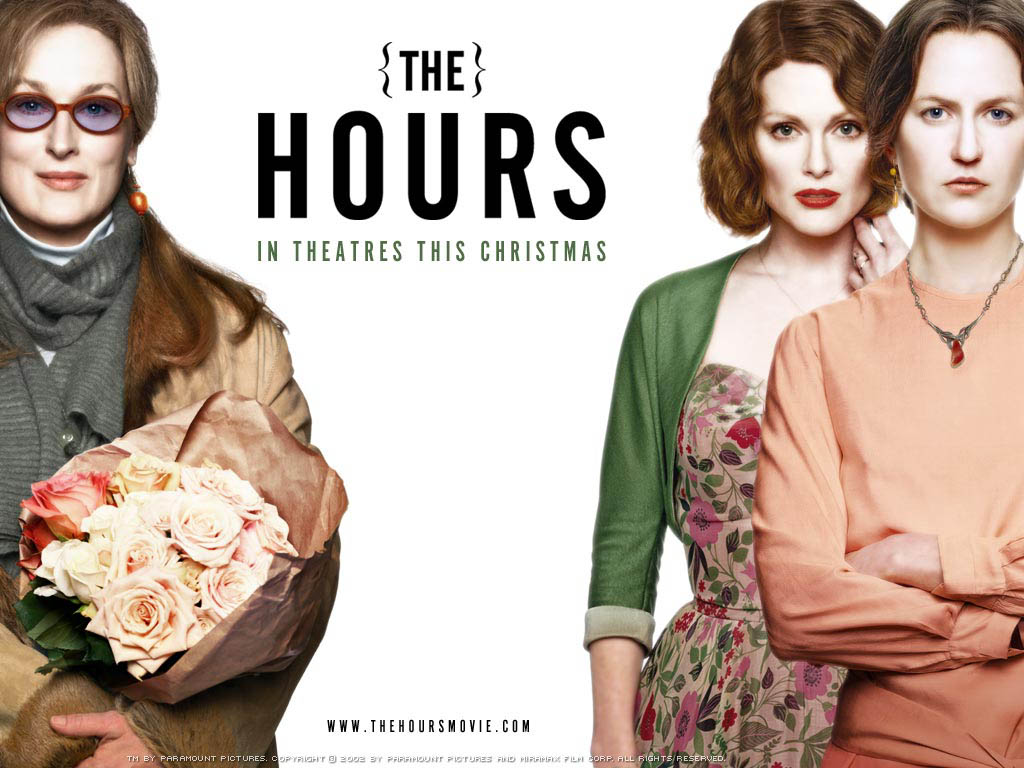
Reading The Hours by Michael Cunningham


"[...] she is fascinated by the idea of a woman like that, a woman of such brilliance, such strangeness, such immeasurable sorrow; a woman who had genius but still filled her pocket with a stone and waded out into a river. She, Laura, likes to imagine (it's one of her most closely held secrets) that she has a touch of brilliance herself, just a hint of it, though she knows most people probably walk around with similar hopeful suspicions curled up like tiny fists inside them, never divulged. She wonders, while she pushes a cart through the supermarket or has her hair done, it the other women aren't all thinking, to some degree or other, the same thing: Here is the brilliant spirit, the woman of sorrows, the woman of transcendent joys, who would rather be elsewhere, who has consented to perform simple and essentially foolish tasks, to examine tomatoes, to sit under a hair dryer, because it is her art and her duty."

A USA Today reviewer said of The Hours: "If this book does not make you jump up from the sofa, looking at life and literature in new ways, check to see if you have a pulse." and I completely agree with his words. The Hours is that one, rare book, which has marked me, has opened my eyes to the invisible essence, invisible truth, has felt special from the very first page onwards.

It is a story about three women: Virginia Woolf, Laura Brown and Clarissa Vaughan. The three stories feel almost like a single story, they're so similar, so interwoven, dealing with the same issues of life. They're about one day in the lives of the women: in 1923 Virginia is beginning to write Mrs. Dalloway and is recuperating from her illness in the suburbs of London. In 1949 Laura is a pregnant woman with a three-year old son, Richie, and is planning her husband's birthday and baking him a cake. In 1999 Clarissa is planning a party for her beloved friend, who is dying from AIDS. At the end of the book we realize what the connection between the stories was and the women are brought together.

The story is absorbing, the quality with which Cunningham portrays the individual characters is breathtaking, his empathy and understanding of the inner life of his characters is enchanting. He manages to create the illusion that each of the characters has a life of her own, that they're separate entities, that he knows all the little details of their lives, all their opinions and reflections, is privy to their most intimate, most secret thoughts. Also the narration is fluent, superbly lyrical without being overbearing. His skill with dialogues is apparent, but even more than that Cunningham possesses the quality of being able to put into words the most everyday feelings and notions, the silent exchanges that occur in between the lines of a dialogue in such a way as makes you realize that they're your feelings and it could as well be your life.

It is useless to deny that my favourite character was Laura Brown. I identify the most with her, I feel her pain most acutely, I understand (or I think I do) how the silent, almost invisible, but none the less present demands to be a perfect mother and wife in a perfect household begin to constrain her, how they begin to eat her from the inside. How it pains her that she doesn't seem to be a natural at raising children and baking cakes. How she feels that what her life has become is a day from the life of some other person wholly unconnected to herself. The following excerpt best describes her pain.

"It seems suddenly easy to bake a cake, to raise a child. She loves her son purely, as mothers do - she does not resent him, does not wish to leave. She loves her husband and is glad to be married. It seems possible (it does not seem impossible) that she's slipped across an invisible line line, the line that has always separated her from what she would prefer to feel, who she would prefer to be. It does not seem impossible that she has undergone a subtle but profound transformation, here in this kitchen, at this most ordinary of moments: She has caught up with herself. [...] It seems she will be fine. She will not lose hope. She will not mourn her lost possibilities, her unexplored talents (what if she has no talents at all?). She will remain devoted to her son, her husband, her home and duties, all her gifts. She will want this second child."

Laura's pain at being unable to be really happy in an "ideal" marriage, with a lovely child, a nice house in a respectable neighbourhood and a good income is a frustration we all feel at times. There are other people who'd kill to be in our places and yet we want more or want it different or don't want it at all. Hers is the story about a woman who wants something else from her life than is desirable, than is expected of her. She is a woman, living in a time, not quite unlike today, when what is expected shapes you more than what you want from yourself. She is a woman who wants to fight the norms, but without going into the street and tearing her bra.

She wants to please, desperately, because she has little self-esteem, but simultaneously she wants to be herself, even if it is the strange, foreign-looking woman, the woman of sorrow and pathos, the woman who deserts everything to be what she thinks she is. Taken in the light of 1950s, her decision is not only brave but almost revolutionary. And it is a decision that carves deep wounds into all members of her family. Here is a woman who did right and wrong at the same time. Here is the everyperson - who does right and who does wrong in the same moment. Who hurts and who is unbearably kind in the same blink of the eye.

The Hours is a book I reread frequently. It is a time when I meditate while reading. I dive into this river of words, I swim with the current and sometimes against it, I taste the water and ask myself whether the sheer act of diving into the river was right. I like that the book is short, but to the point, and that the story is told with such mastery of language. I might be wrong, but then again you're always prejudiced about your favourite books. I recommend this little wonder to you, especially as we have a Slovenian translation, too. (Although I will venture to say that the original is much better.)


P.S. I'm still interested in your opinions regarding the new design of my blog.

Labels:

posted by Nadezhda | 16:22 | 6 comments

Monday, June 05, 2006

Beauties


These lovely beauties await me when I'm finished with my exams. Can't wait to start! Also, I'd like to read some Coelho, as I haven't read any of his books and I'd like to re-read some classics like Madame Bovary.

P.S. Those interested in creative writing course, be sure to check Bo's last comment here.

Labels:

posted by Nadezhda | 16:27 | 12 comments

Tuesday, May 30, 2006

Reading Girl with a Pearl Earring by Tracy Chevalier


Because I've had very little time lately I chose to humour you with pieces of my life, which (I have to admit) were much more funny and interesting when I was thinking about posting them here than they were when I actually did it. Then main reason for writing more about my (currently very boring - books'n'sleep) personal life was that writing book "reviews" takes up more time. Or at least I imagined so. Today, as promised I will put an end to this going-nowhere personal crap and finally give you some real content. (For a content obsessed blogger, that's a step in the right direction.)

I bought the book just because I saw the film first and loved it. I watched the film with boyfriend who said it was an unusually quiet film. And so it was. But the photography, the superb acting, the ability to say a "thousand" words with a look or a gesture is apparent and very functional in this film. Also, it is not a secret that I find Colin Firth a decently talented actor and that all my hopes (for a splendid acting career) lie with Scarlett Johansson.


I first wanted to borrow the book from a library as I often do. For weeks I waited in vain. The book seems to be very popular with Slovenian readers. Then a few weeks ago, when I was in Konzorcij, I saw it on a shelf, and as it was reasonably priced, I bought it. I expected quite a lot of this book. Mainly because I liked the film so much, but also because it received good reviews and because it seemed to be popular. I was (if only a little) disappointed.

The book's written in first person singular, so the story is told from Griet's, the housemaid's standpoint. For some moments, this functions well. To be honest, this technique functions remarkably well in this book - it renders Griet unable to know what others are thinking and thus makes her more distant, more alone in the house where she serves. This loneliness is the best described aspect of the book - how Griet is alone: the only maid to help him, the only to clean for him, the only to understand him. It is logical that she perceives herself of special importance to him and thus she finds herself being in love, despite the fact (the book's more clear on this than the film) that he doesn't reciprocate her feelings. He certainly likes to be understood, but he doesn't fall in love with Griet (it is very obvious how he loves his wife when he says he converted from Protestantism to Christianity).

The book is naive, the language almost overly simple, but has an air of determination, an almost Griet-like personality (again, benefiting from the first person singular narrative). But that is the only other good thing there is. The story is not very unusual, though the climate at Vermeer's house is well described. There are certain little scenes, private battles of wills, envy, loneliness, a little despair - these are little triumphs in this book. Unfortunately, the author didn't manage to extend the tone and manner of these paragraphs to the whole book.

It's a decent book, but never a very good one, because once you've read it, there is hardly anything to add. The story's finished, at some points even lamely motivated (like at the end) and there are no further questions. I often find that with great books, with the exceptional books, one identifies (if only a very small piece of their personality) with the book. At one point you might say - that's exactly how I feel, but I wouldn't have ever been able to describe it like that. There are paragraphs you'd ponder why it happened that way only to discover that there was no other way. There will be phrases stuck in your memory, there will be powerful feelings that the book evoked, there will be the experience of first reading the book, that you'll never forget. And somehow, Chevalier's book doesn't quite manage any of this. It is a simple story, perhaps a little tragic, but with a positive ending. What it lacks is a better motivation of certain Griet's (and others') actions.

In conclusion: this is a book you may enjoy reading on holidays, but by no means is it something that will stay with you or guide you through the tough times. You might find the narrative a little overbearing sometimes, but the first person singular seems to be quite the Chevalier's way of writing. Her last book, The Lady and the Unicorn is written the same way as well (at least the first chapter - the taster - is) and the plot is remarkably similar. This is where the tables started to turn. I read the Girl in one day, enjoyed it, but not completely as I already knew what happens. Then I read about the Lady and saw a pattern emerge. I had professed my deeply buried dislike for authors who repeat a "bestseller" formula (once they've discovered it) all over again. And I think I might be beginning to feel that way about Chevalier as well. Do you think I'll ever read the Lady? I think not.

Labels:

posted by Nadezhda | 11:20 | 2 comments

Saturday, April 22, 2006

Reading The Speed Reading Book by Tony Buzan


Tony Buzan is something like a deity to me. Not only because he's the official inventor of Mind Maps, my preferred technique for making notes, giving speeches and planning tasks, but because he's shown me the way to learn.

Many people think investing time in reading how to read is useless, because you should just read more. So if you're a bad cook, you should just cook more in the same way that gave catastrophic results? Or would you consider reading a cookbook or two before attempting another shot at lasagna? Applying your old habits and approaches does not work if you want to improve.

Reading speed is something I was stuck with for quite some time. I was a painfully slow reader, not because I couldn't read faster, but because I thought and stuck (especially with study materials) to the method, that in order to understand and remember, you have to read slowly and carefully. I also like to read so I hear words in my head which additionally slowed me down. (Poems and novels are great to read this way, you can literally feel the verses and the paragraphs form in your mouth, it's not just going over words and understanding them, but feeling them, pondering about them... I love to do this, it's a physical contact with the material; likewise I can't read off the computer screen, I have to print the material out.) And here was my friend Tony, who was the first one to tell me that slow and carefully does not amount to better comprehension. And once I tried, when I forced myself to read faster, I noticed that I understand the material better.

I still have problems, because I was stuck with my old, slow reading speed for decades and have to force myself to read faster and faster (Ideally I also use a leading tool, a pencil, otherwise I start reading fast, but the more I read the slower I get.) and especially with study materials this is still difficult. Realizing I could read twice as much in the same amount of time gives me hope, though, so I force myself to read faster, even if that means I have to read the same chapter twice. Reading faster gives you more time to reread, which I like doing and it does miracles for my memory. Once I read a text three or four times I already know it (almost) by heart.

Generally, this is a good speed reading book, a real do-it-yourself book, which offers insight into how people read and how to improve reading speed. However, I'm still a little skeptic about eventually reading at 3000 wpm, because even 500 seems quite fast to me. Also reading with a backwards sweep or two lines at a time is difficult, especially when the lines are long. In a newspaper I can read two lines at a time, but in a study book or a novel I find it very difficult. However, I hope that with perseverance I will manage to read even faster in the future. The only bad thing is that without a lead, I usually get stuck and start reading progressively slower. Having a lead on you at all times is not so difficult, but getting it out and using it is. I guess I'll just have to persevere.

While Tony still advocates some old-school ideas (e.g. that the brain is split in left, rational, hemisphere and right, creative, hemisphere), he always manages to introduce me to new knowledge which helps me to continually improve myself and that's what I like about him and what makes me read his books.

Has anybody tried to speed-read? What is your maximum speed?

Labels:

posted by Nadezhda | 11:06 | 14 comments

Wednesday, April 05, 2006

Reading The Curious Incident of the Dog in the Night-time by Mark Haddon


I bought this book in the morning, but I only started reading it in the evening of the same day; -I opened it, smelled it and saw that it begins with the second chapter. Hm... Perhaps a badly bounded copy and they left the first chapter out? I turn a few pages and still I couldn't find the first chapter. Then I notice that a third chapter follows the second and a fifth chapter follows the third. And it occurs to me that the chapters are prime numbers.

"Prime numbers are what is left when you have taken all the patterns away. I think prime numbers are like life. They are very logical, but you could never work out the rules, even if you spent all your life thinking about them." This is how Christopher Boone, a fifteen-year-old, explains why he's decided to use prime numbers for the chapters of his book. Christopher is not like any other boy, he's remarkably reflective, completely uninterested in girls, has in-depth knowledge of physics and mathematics, nearly perfect recall (memory) and often doesn't understand what people are trying to say. Although Christopher doesn't say it himself, the reader soon realizes that he's autistic. Christopher devises patterns according to which he sets his mood and chooses foods he likes, he doesn't like to be touched by other people and has difficulties deciphering meaning behind sentences. He needs a very structured, minute by minute schedule and he needs to check his watch constantly (to know what the time is) to feel safe.

Autists fascinate me, because things that seem easy and self-explanatory to us are incomprehensible to them. The following passage explains what I mean more fully: "But when you get married it is because you want to live together and have children, and if you get married in a church you have to promise that you will stay together until death do us part." Autists have problems detecting and expressing feelings (going beyond learned politeness) and their lives feel empty to us (reading the book, you are constantly reminded that there's something lacking). That's why autists have problems understanding normal conversations - a big part of what we say is marked by feelings and that is the part they're unable to receive and correctly decode. Autists thus understand words as they are, without the emotional connotation.

The lacking emotions are what the book manages to convey best. It's an interesting introspective into the life of an Asperger child, introducing to a wider audience the topic of autistic thinking. A lovely attempt with simple language and a whodunnit atmosphere; all in all a charming book - so short or so interesting you can read it in one sitting.

*
But not all is lost for Christopher, because he has devised a plan for his future, too; and mind you, he will do exactly as he says, because he never lies (again, people who don't have feelings lose the cause for lying).

"Then, when I've got a degree in Maths, or Physics, or Maths and Physics, I will be able to get a job and earn lots of money and I will be able to pay someone who can look after me and cook my meals and wash my clothes, or I will get a lady to marry me and be my wife and she can look after me so I can have company and not be on my own."

Labels:

posted by Nadezhda | 16:53 | 10 comments